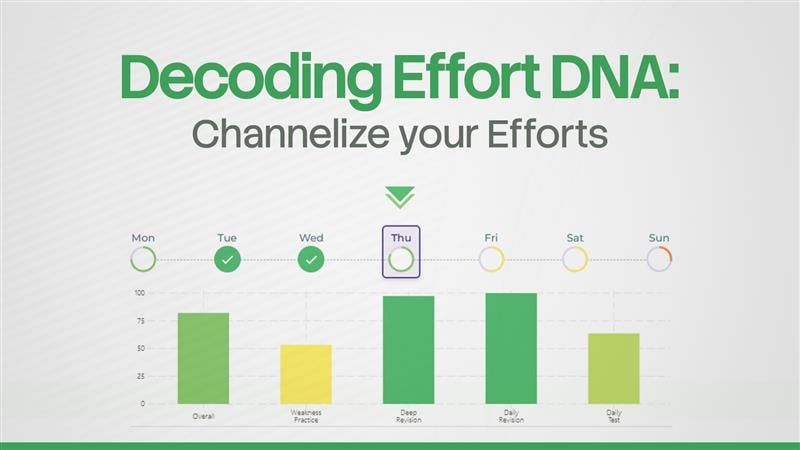
Preparing for NEET PG is not just a battle of syllabus completion — it’s a battle of consistency, direction, and clarity.
Every NEET PG aspirant studies, but only a few study in the right way: correcting their mistakes, revising the right topics at the right time, practicing where they’re actually weak, and training their mind for the pressure of a timed computer-based test.
Most students believe they are “doing enough,” yet their performance doesn’t improve because their daily effort is scattered.
They revise what feels comfortable, avoid topics that feel heavy, forget to revisit older questions, and take mock tests without building the stamina needed for the real exam. This is exactly where students lose marks — not because they’re not working hard, but because their effort isn’t structured or measurable.
Effort DNA was built to solve this problem. It is a simple, single score that tells you whether your daily study behaviour is scientifically aligned with how NEET PG toppers prepare.
What is Effort DNA?
Effort DNA is a single, easy-to-read score that measures the consistency and quality of your NEET PG preparation. It doesn’t punish you for bad days — it rewards what matters: fixing mistakes, testing like the exam, revising deep, and focusing on real weaknesses. Think of it as a progress meter for study habits, not just raw marks.
.png)
Overview of Effort DNA
Why we built Effort DNA?
- NEET PG Prep isn’t just what you know today — it’s what you can reliably recall and apply under pressure. Effort DNA measures that reliability.
- It prevents false comfort. Students often feel “I did questions” but haven’t fixed the mistakes. Effort DNA separates superficial practice from real learning.
- It focuses your limited time. When the syllabus feels enormous, knowing which weak parts actually move your readiness index saves hours.
- It trains exam behaviour. Daily Tests build speed and stamina; Deep Revision builds durable memory; Weakness Practice ensures comprehensive coverage. Together, they mirror the demands of the actual test.
What makes up Effort DNA - the four components
1. Daily Revision — learn from your mistakes
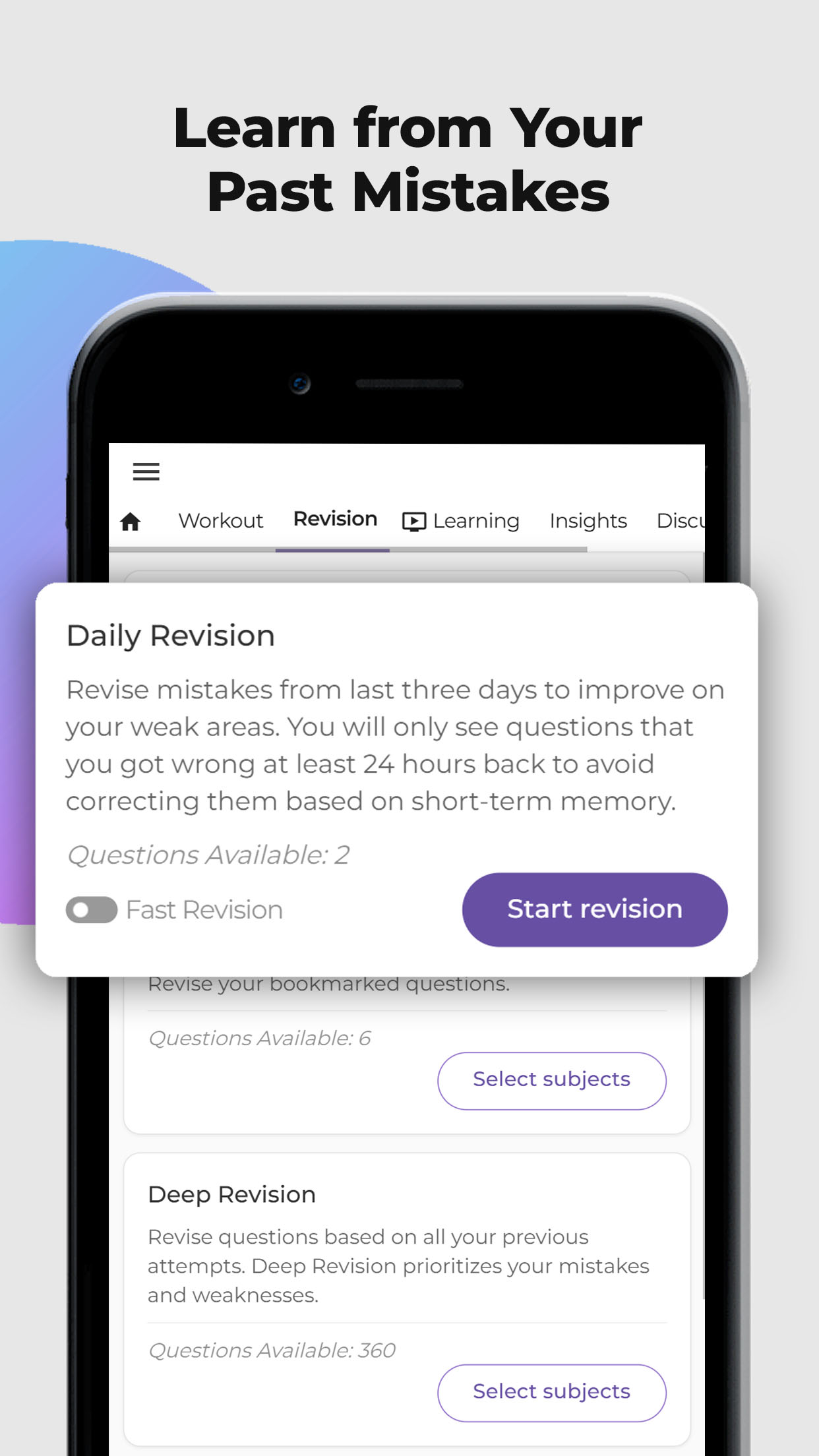
- Collects only the questions you answered incorrectly in the last three days.
- Purpose: fix short-term forgetting before it becomes permanent.
- Why it matters: practicing without correcting is rehearsal, not learning.
2. Daily Test — test yourself daily in an exam-like setup

- Simulates the computer-based exam environment so you build speed, focus, and stamina.
- Purpose: Tracks rank, accuracy, and time management.
- Why it matters: the exam is a timed CBT — the habit of daily testing trains you to perform under those exact constraints.
3. Deep Revision — reinforce long-term learning

- Brings back questions based on all your previous attempts to priortize your mistakes
- Purpose: Includes similar and twisted versions of questions to check real understanding vs guessing.
- Why it matters: long-term retention and conceptual clarity come from spaced, varied practice — not one-off attempts.
4. Weakness Practice (Focus Practice) — target the gaps

- Directs practice to older topics and genuinely weak subjects highlighted by your PrepDNA.
- Purpose: Improves only when you work on the red/weak areas, not the green/strong ones.
- Why it matters: Working on strengths doesn’t move your overall readiness; improving weak zones does.
Note: Daily Revision, Deep Revision, and Weakness Practice carry the most weight in the Effort DNA calculation — because fixing and reinforcing mistakes is where learning compounds.
How Effort DNA Works
Effort DNA measures how consistently you're using the Pre-PG app the way it is designed to give you the maximum benefit.
To calculate your daily Effort DNA, the system looks at four types of effort you put in:
1. Weakness Practice — Focus on Your Weakest 30% Subjects/Topics
This is the heart of Effort DNA.
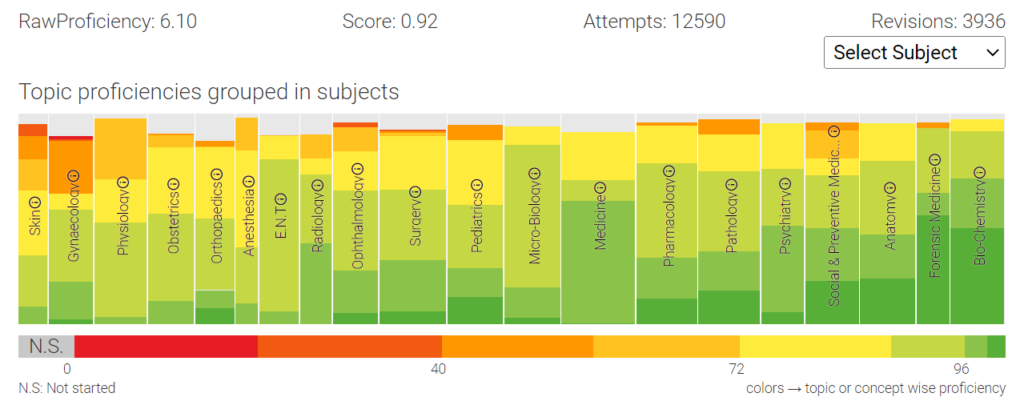
PrepDNA Analysis
The app identifies your bottom 30% subjects or topics using your PrepDNA — the areas where your accuracy, recall, or speed is weak.
To improve you your Weakness Practice bar:
- You must attempt a minimum of 100 questions from your weakest subjects (daily), or
- 15 questions from every weak topic
Only then does the system treat it as genuine work on your weak zones.
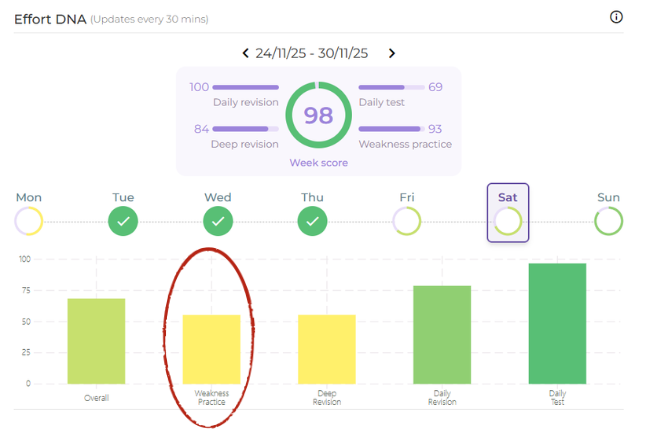
Average weakness practice graph of a user
This prevents the usual mistake NEET PG aspirants make — repeatedly practising from their strong subjects because it “feels good.”
Effort DNA rewards effort where the bar rises: By practicing the subjects that scare you, confuse you, or that you haven’t touched in a while.
2. Deep Revision — Revise Older 30% Subjects/Topics
Deep Revision is your long-term memory engine.
It asks you to revise the oldest 30% of your practiced subjects/topics.
The benchmark is:
- 100 questions of Deep Revision(daily),
- Ideally, spending an hour daily on solving Deep Revision questions.
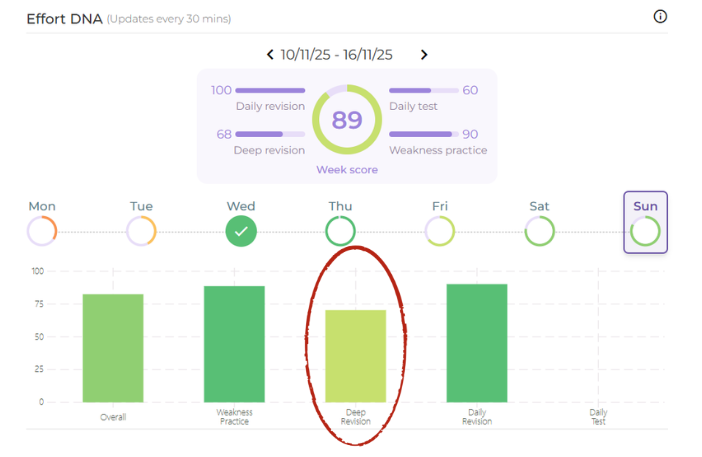
Moderate deep revision graph of a user
Deep Revision pulls back questions from older attempts and includes similar/twisted questions. This helps you figure out:
- What concepts you truly understand
- What you only remembered short-term
- Which mistakes keep repeating
This spaced reinforcement is what converts short-term learning into exam-day retention.
3. Daily Revision — Fix Your Recent Mistakes
Daily Revision covers mistakes from the last three days.
- It should take 15–45 minutes to complete.
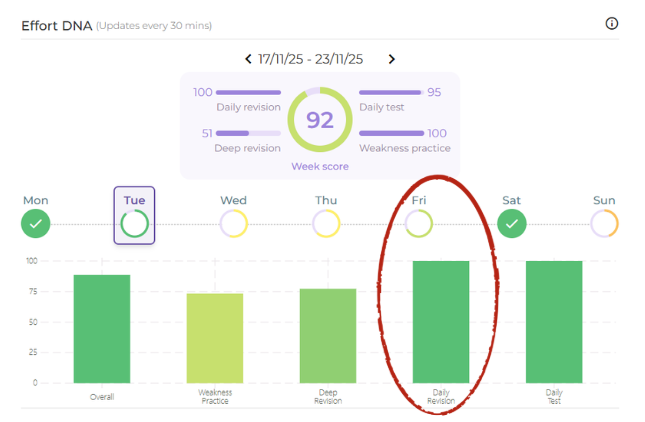
High daily revision graph of a user
Daily Revision is your “don’t let the mistake escape” filter.
If you skip this, you end up forgetting exactly the same things you got wrong earlier — and the cycle repeats.
Even on days when you don’t have time for full studying, clearing your Daily Revision ensures uninterrupted learning momentum.
4. Daily Test — Optional, but Adds Extra Effort Points
You don’t have to take a Daily Test — but if you do, it boosts your overall effort.
The Daily Test:
- Trains you for the actual computer-based exam
- Builds your speed, accuracy, and time control
- Helps you understand your progress in real exam conditions
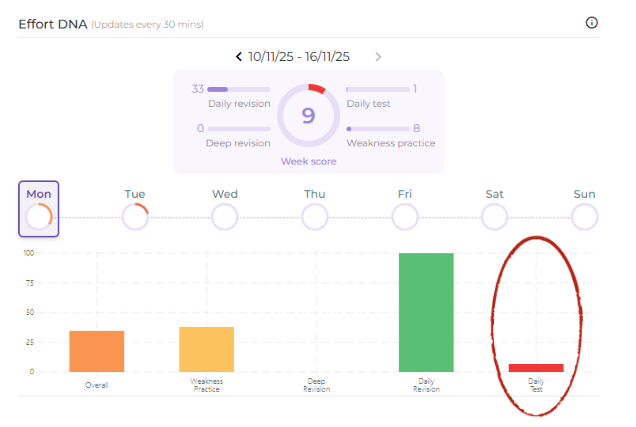
Inconsistent daily test graph of a user
Because NEET PG is a timed CBT, Daily Tests are a low-effort way to build exam stamina without waiting for full mock tests.
How Your Effort Is Scored
Your effort is graded on a scale of 100, where 100 is the best effort.
This means your Effort DNA score (0–100) reflects how closely your daily preparation aligns with these four components.
In our data, students who maintain 90+ Effort DNA for several months almost always end up getting a good rank in NEET PG.
Because a high Effort DNA score doesn’t happen by accident.
It reflects the exact behaviours that lead to high marks:
- strong retention
- disciplined revision
- continuous testing
- and closing weaknesses systematically
If your Effort DNA stays high, your readiness for the exam stays high too.
Putting It All Together — A Simple Daily Flow
Here’s how a NEET PG Toppers use Effort DNA:
Morning
Do 100 questions from weak subjects (Weakness Practice). We recommended focusing on one subject at a time while doing the same.
Evening
Finish Daily Revision (15–45 minutes).
Do Deep Revision if you have time (100 questions).
Anytime
Take a Daily Test (optional but gives extra effort points).
Every action updates your Effort DNA score at the end of the day.
You don’t need long stretches every day — you need the right kinds of repetition, and Effort DNA rewards precisely that.
Conclusion
Effort DNA turns ordinary practice into measurable improvement. It rewards the habits that actually build long-term recall and exam readiness: fixing mistakes fast, testing in real conditions, spacing revision, and attacking true weaknesses.
For a NEET PG aspirant, that means less guesswork about “am I improving?” and more clarity about what to do next.
Start small, be consistent, and let Effort DNA show you how your everyday choices add up. Smart, focused effort—measured the right way—is the shortest route from preparation to the rank you’re aiming for.