
Two months.
That's what stands between you and NEET PG 2026. Not two years, not two semesters — two months. And if you're reading this, you already know the panic that number can trigger: the syllabus feels endless, your revision notes are scattered across four apps and a dozen notebooks, and somewhere in the back of your mind is the nagging feeling that you've "read everything but remember nothing."
Here's the good news: the last 60 days aren't about reading more. They're about reading smarter — cutting the noise, doubling down on what actually shows up in the exam, and training your brain to retrieve information fast, under pressure, exactly the way NEET PG demands.
This is your roadmap for the final stretch — and how to use Pre-PG's tools to actually execute it, instead of just planning it.
Stop Studying Blind — Start Studying Data-Driven
Most aspirants enter the last two months with a vague sense of "I'm weak in Pharma" or "Micro scares me." Vague is dangerous. You don't have the runway left to guess.
This is where PrepDNA becomes your starting point, not an afterthought. Before you decide what to revise today, open your PrepDNA insights and actually look at the numbers — which subjects you're strong in, which topics are quietly dragging your score down, and which ones you've never circled back to since the day you first studied them.
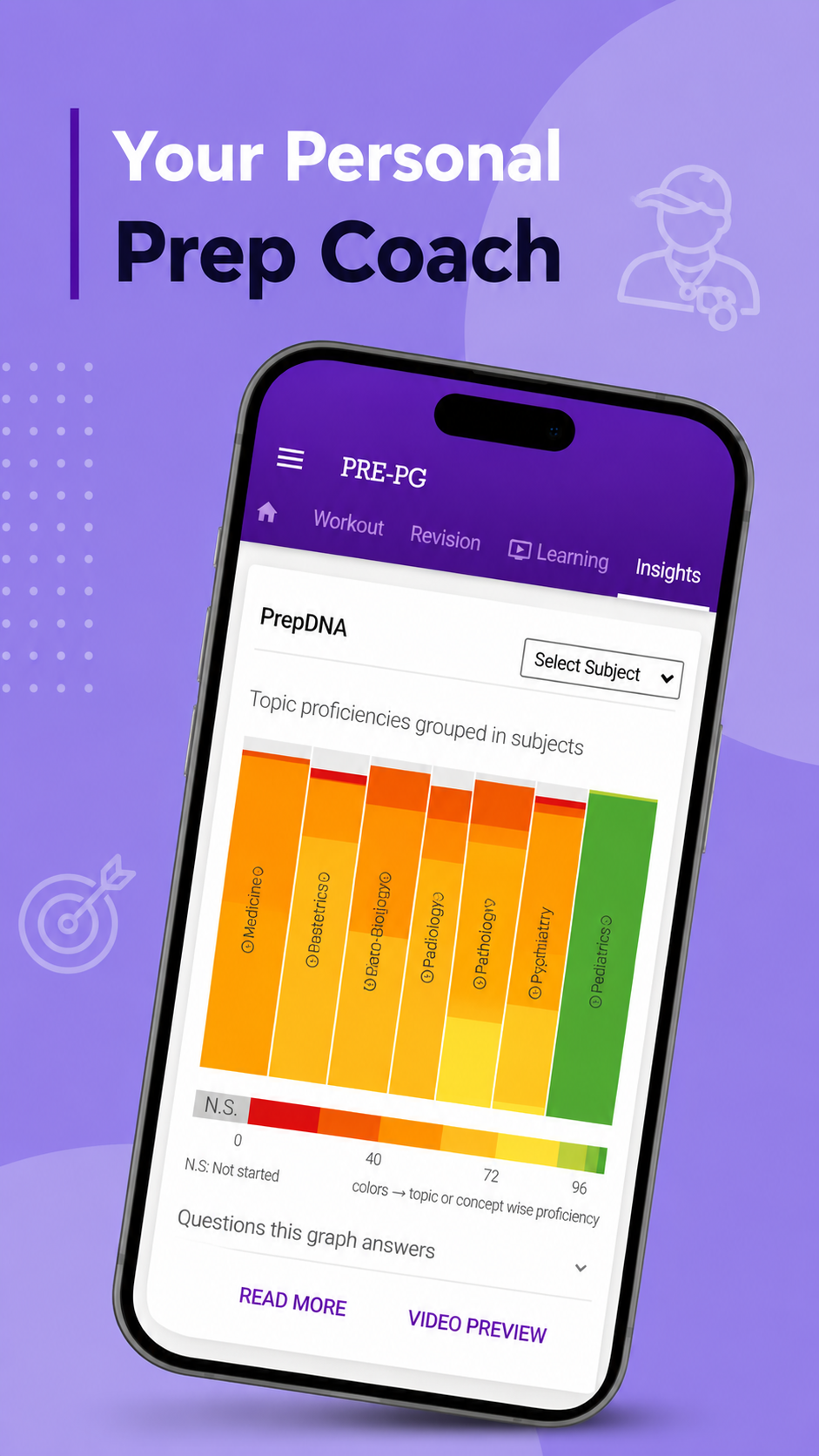
It's the difference between "I feel weak in Renal Physiology" and "I'm getting 40% on Renal Physiology across the last three months of practice."
Use these two months to build a subject priority list ranked by PrepDNA's data, not by gut feeling. Spend the first month attacking your bottom quartile subjects — the ones with the biggest score-to-effort payoff — while keeping your strong subjects alive through quick daily touchpoints, not deep dives.
Understand the Difference: Daily Revision vs. Deep Revision vs. Bookmarked Revision
This is the part most aspirants get wrong — they treat "revision" as one giant, undifferentiated task. It isn't. There are three very different jobs to do, and Pre-PG splits them for a reason.
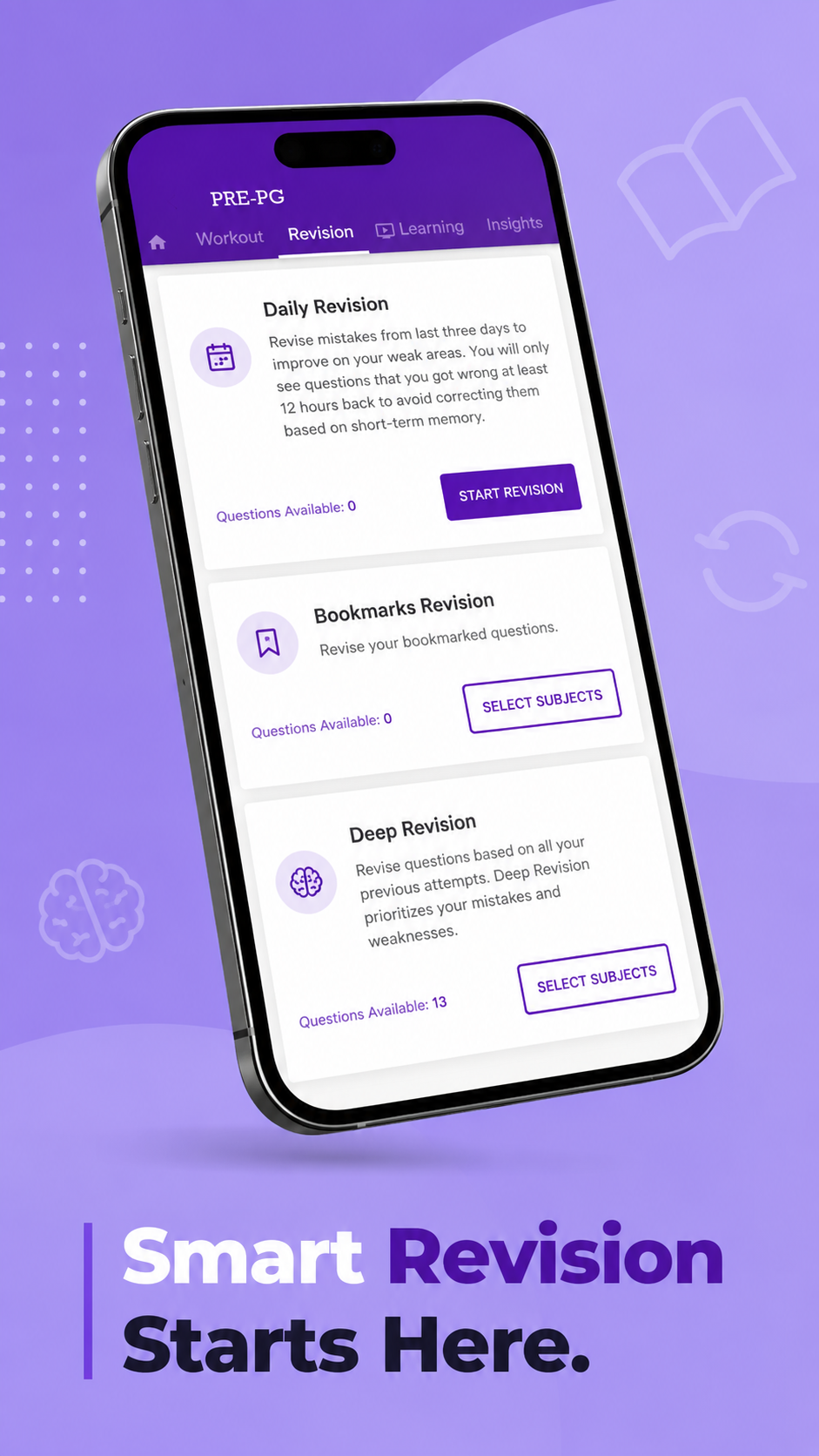
Daily Revision is your maintenance dose. It's short, it's fast, and it's meant to touch every wrong attempt lightly so that the mistakes in last 3 days don’t evaporate. Ten to fifteen minutes, every single day, no exceptions — treat it like brushing your teeth, not like studying.
Deep Revision resurfaces your past mistakes from any subject or topic, identifies recurring error patterns, and helps you revisit them every few weeks—turning your mistakes into a dynamic, self-updating revision notebook.
Bookmarked Revision is your personal shortlist — every high-yield fact, every tricky concept, every "I always forget this" moment you've flagged while studying through the year. In the last two months, this list is gold. Run through your bookmarks at least twice a week; they're the fastest way to plug the specific holes only you have.
PYQs Aren't Optional — They're a Map
If you're still treating Previous Year Questions as "extra practice for later," rethink that now. PYQs are the closest thing you have to a leaked syllabus — they tell you exactly how examiners phrase concepts, which topics repeat, and where the traps usually sit.
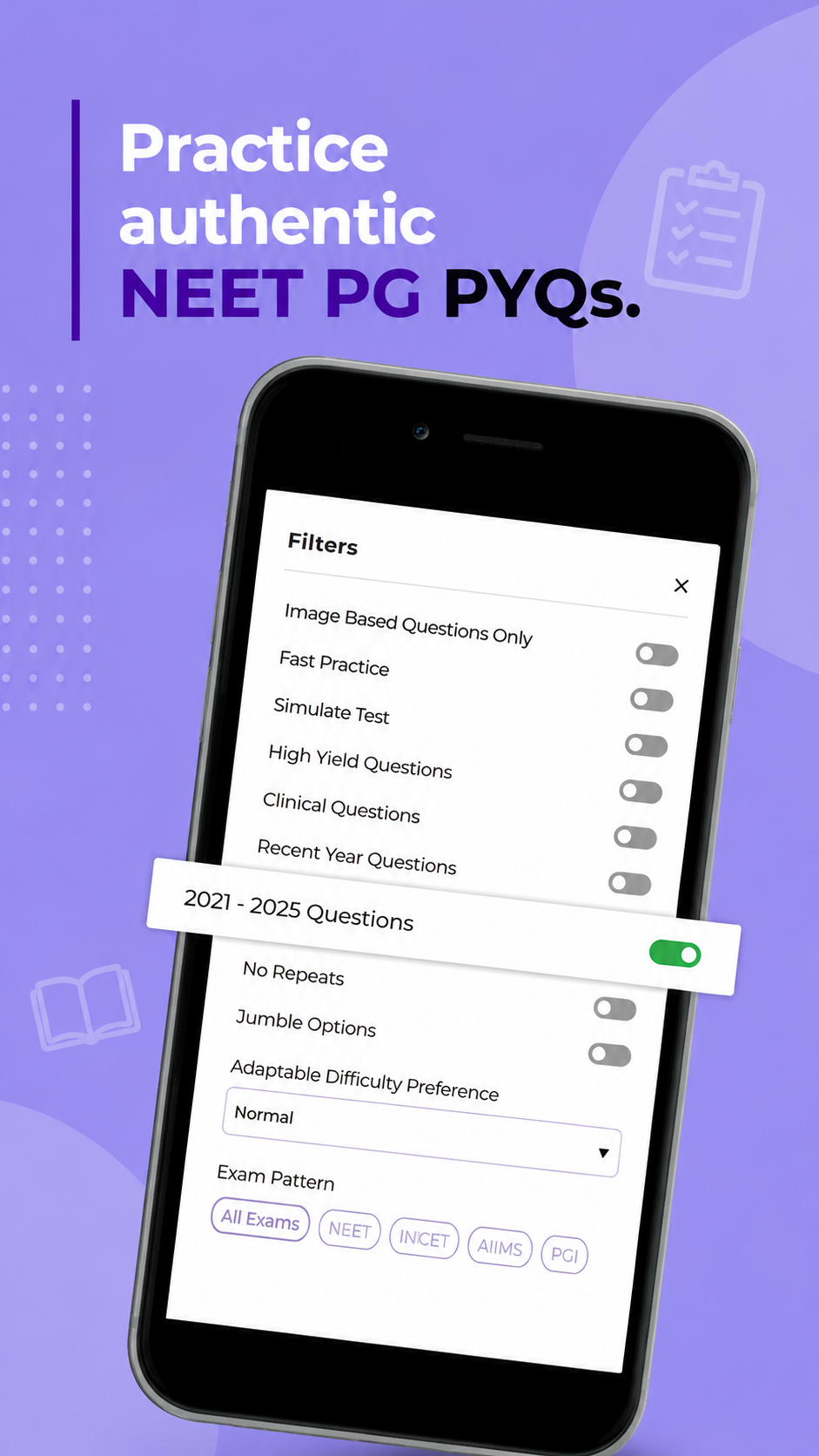
Start with subject-wise PYQs right after every Deep Revision session while the concepts are still fresh. Then use Darwin's filters to sharpen your practice further—solve Recent Year Questions, or focus exclusively on 2020–2025 PYQs to match the latest exam trends.
Then, once a week, run a mixed PYQ set across subjects to simulate the unpredictability of the real paper. Pay attention to patterns: certain themes in Pharmacology, Microbiology, and Community Medicine show up year after year in only slightly different clothing.
Notes for Easy Revision
With 60 days left, you simply don't have the time to be your own notes-maker anymore.
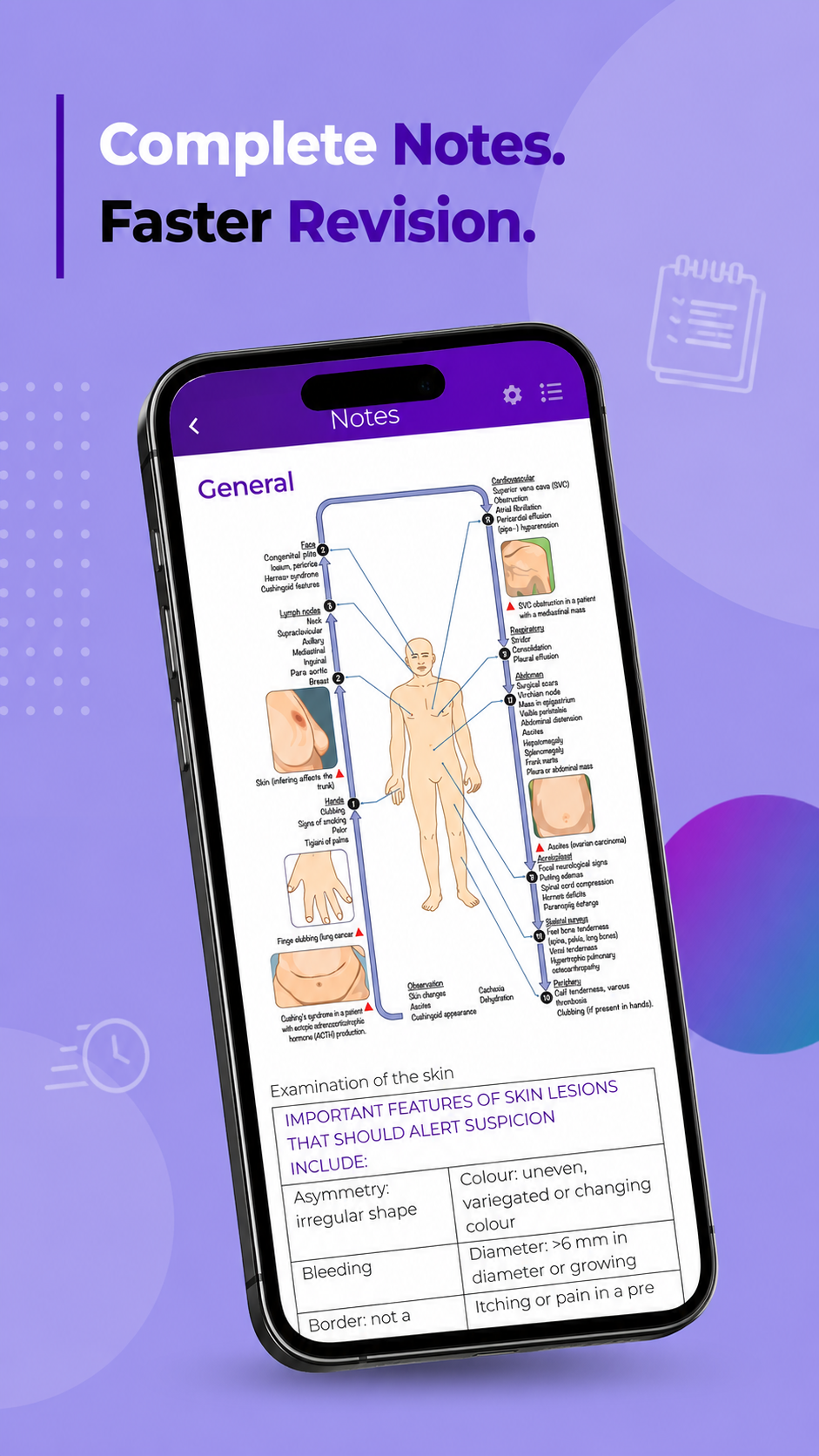
This is exactly why Pre-PG's Notes exist — condensed, exam-ready notes for every topic, already built to be scanned in seconds instead of studied all over again.
Every drug's one distinguishing side effect, every syndrome's one giveaway sign, every classification reduced to a concise summary — it's already there, so you don't have to spend your last two months compressing information yourself.
Don't Ignore the Clinical Shift
If you've looked at recent papers closely, you already know NEET PG has been leaning heavier into clinical, scenario-based questions rather than straight recall. Pure theory revision alone won't cut it anymore — you need practice that mirrors how questions are actually being asked now.
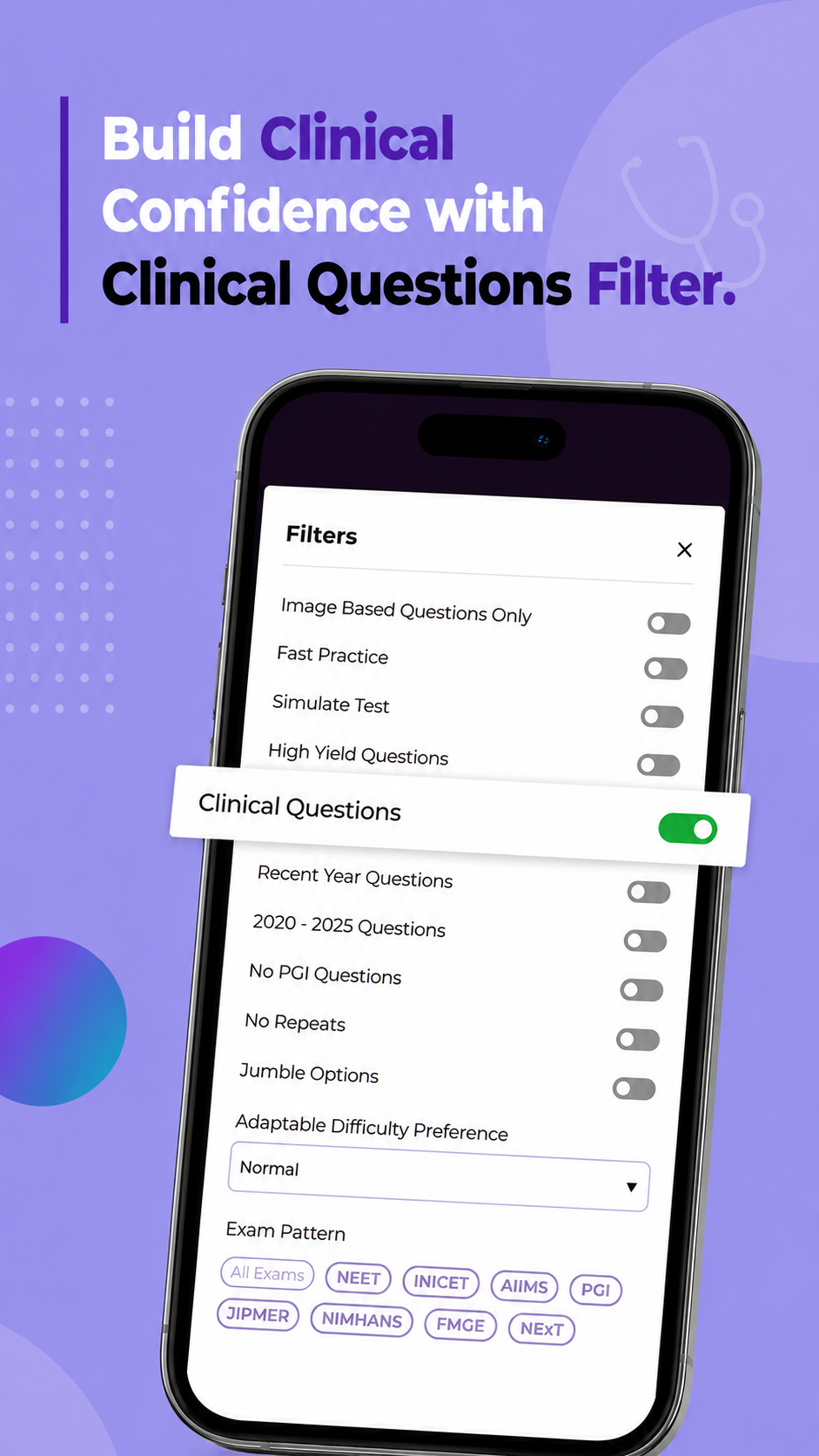
This is where Pre-PG's Clinical Filter becomes worth building into your last two months. It lets you pull out clinical, case-based questions specifically, across subjects, so you're training for the exact pattern the paper has been shifting toward — not just isolated facts, but applying them the way a real case would demand.
Build Exam Stamina, Not Just Exam Knowledge
Knowing the answer isn't enough—getting it right under exam pressure is what matters. Practice the real NEET pattern: 180 MCQs in 210 minutes to build speed, accuracy, and stamina.
Switch a meaningful chunk of your practice to Timed Sections. Don't just answer questions — answer them against the clock, the way you will on exam day.
This does two things: it exposes the topics where you know the concept but freeze under time pressure, and it trains your pacing instinct so you stop running out of time in the last 50 questions of a mock.
Alongside this, start taking free full-length Mock Tests on Pre-PG. Treat every mock as a dress rehearsal — same wake-up time, same breakfast, same environment if possible. After each mock, don't just check the score and move on. Go back into PrepDNA and see how the mock shifted your subject-wise standing. A mock test you don't analyze is a mock test you've wasted.
A simple weekly rhythm for this phase:
- 2 full-length Mock Tests
- Daily Timed Sections practice (subject-wise, 20-30 mins)
- Deep Revision on whatever the latest mock exposed as weak
- Bookmarked Revision, twice a week
- Daily Revision, every single day
Stuck at 1 AM? That's What StudyPal Is For
Last-minute prep has a very specific kind of loneliness — the doubt that hits you at midnight, three days before a mock, when your batchmates are asleep and your faculty isn't answering calls. This is exactly the gap StudyPal is built to close.
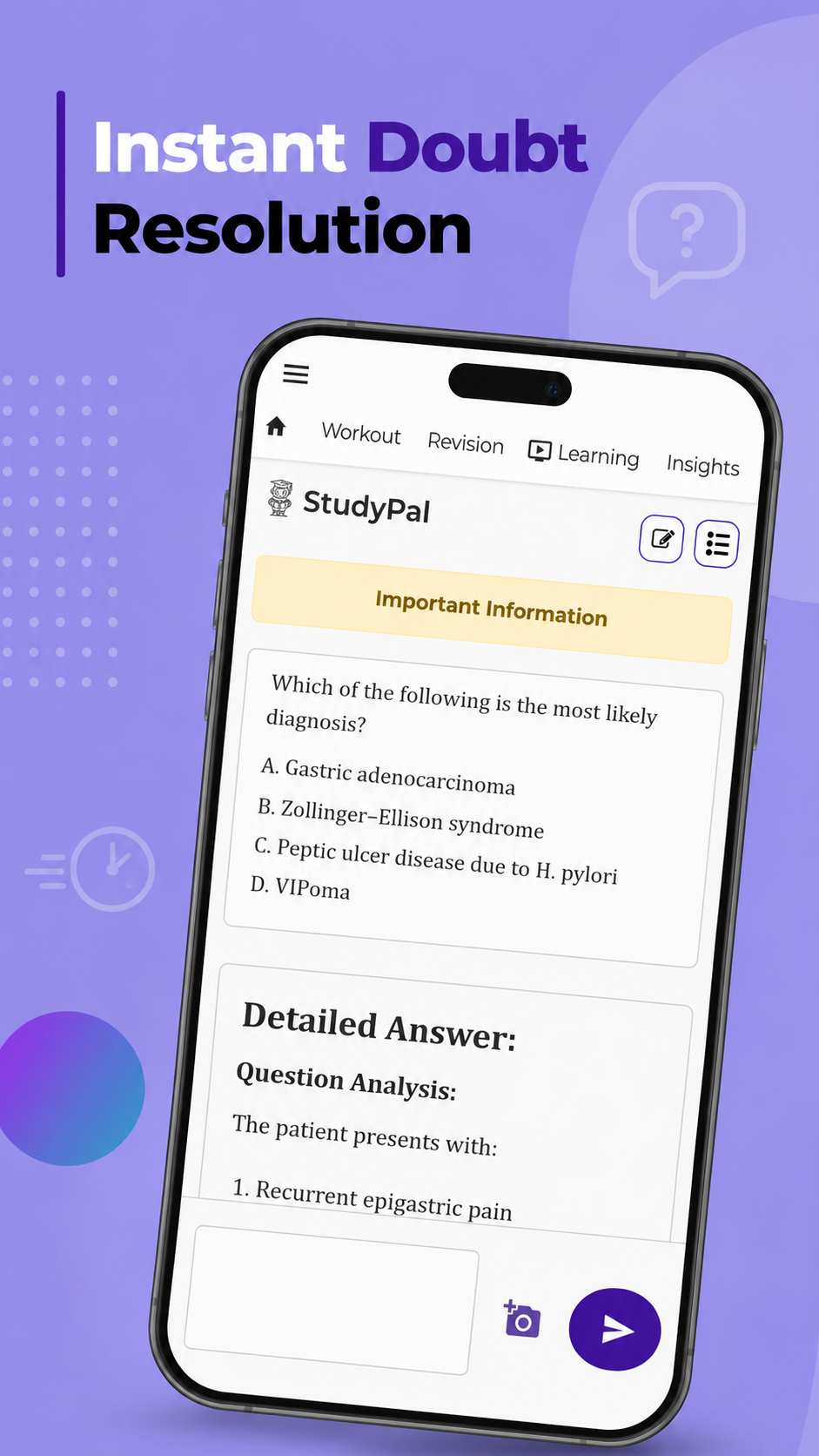
Instead of letting a doubt sit unresolved and quietly eat into your confidence, ask StudyPal right when it strikes.
Get the concept clarified with reference backed answers, and move on — same night, not "I'll ask someone tomorrow and probably forget."
In the last two months, an unresolved doubt isn't a minor inconvenience; it's a mark you might lose because you never fully understood a concept you technically "read."
Use StudyPal aggressively during practice especially — that's when the trickiest, most nuanced doubts tend to surface.
Last Ten Days
The final ten days aren't for learning anything new. They're for consolidation, confidence, and protecting your mental state.
- Stop opening new topics. Anything you haven't touched by Day 10 is not worth the risk of confusing you now.
- Run your Bookmarked Revision list daily. Your toughest marked questions deserve repeated revision.
- Take one or two final Mock Tests, timed and full-length, in the first half of this window — never in the last 48 hours. You want your last exam-like experience to build confidence, not adrenaline you have to sleep off.
- Use Daily Revision religiously, right up to the day before the exam, to keep every subject warm without overloading yourself.
- Check PrepDNA one final time — not to find new weaknesses to panic about, but to confirm how far you've come. Seeing the graph move is, frankly, one of the best confidence boosts available to you right now.
- Sleep well. Eat properly. Walk into the exam hall knowing that the last 60 days weren't spent guessing — they were spent closing gaps you could actually see, one data point at a time.
The Bottom Line
NEET PG doesn't reward the person who read the most. It rewards the person who revised the right things, enough times, and could retrieve them fast under pressure. In your last two months, let Pre-PG do the heavy lifting on what to study and how well you're retaining it — PrepDNA to tell you where you stand, Daily/Deep/Bookmarked Revision to close the gaps in the right order, PYQs to show you exactly how questions get asked, Timed Sections and Mock Tests to build real exam stamina, and StudyPal to make sure no doubt ever sits unresolved.
You've put in the work all year. These last 60 days are about making sure every bit of it actually shows up on results day.
All the best, future doctor. Go get it.